
Oral Health Probiotics — The Honest, Complete Science Guide for 2026
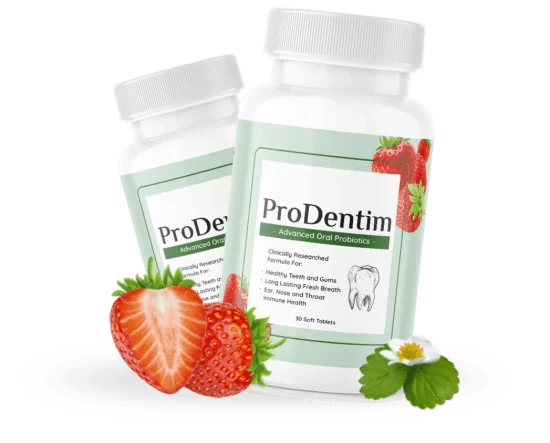
Oral health probiotics represent one of the most significant paradigm shifts in modern dentistry — a move from the “eliminate all bacteria” model that has dominated for a century toward a “balance the ecosystem” model that the science of the oral microbiome now demands. This guide explains why this shift matters, what the clinical research says, which probiotic strains have the strongest evidence for dental health, and which oral probiotic supplement meets our standards as a Registered Nutritionist-Dietitian.
The human mouth is not sterile — it is not supposed to be. It hosts over 700 bacterial species in a dynamic ecosystem that, when balanced, performs critical protective functions: suppressing cavity-causing bacteria, protecting gum tissue from inflammatory assault, neutralizing volatile sulfur compounds responsible for bad breath, and supporting the immune responses that defend oral tissue. When this ecosystem is disrupted — by antibiotics, aggressive antibacterial oral care products, poor diet, or systemic illness — pathogenic species fill the vacancy faster than protective ones can reestablish. Research published in Nature and reviewed by the National Institute of Dental and Craniofacial Research (NIDCR) has confirmed that people with the healthiest oral cavities consistently harbor higher populations of the specific bacterial species that oral health probiotics are designed to deliver.
What Are Oral Health Probiotics — and How Are They Different From Regular Probiotics?
Most people are familiar with gut probiotics — supplements containing Lactobacillus acidophilus, Bifidobacterium, and similar strains that are swallowed in capsules to support digestive health. Oral health probiotics are a distinct category: they use different strains, they are delivered through a completely different format, and they target a completely different anatomical site.
A gut probiotic capsule is engineered to survive stomach acid and reach the intestines. An oral health probiotic must never reach the stomach in that form — it must release its bacteria directly into the oral cavity. This means the delivery format is not a cosmetic detail; it is the entire functional mechanism. A chewable or dissolvable tablet that releases 3.5 billion CFU while slowly dissolving in the mouth delivers bacteria to the teeth, gumline, tongue, and cheeks — exactly where they need to colonize. A capsule swallowed with water provides zero oral microbiome benefit, regardless of how impressive its strain list sounds.
This is why most “probiotic for oral health” products on the market are nutritionally incoherent — they use gut probiotic strains in swallowable capsule formats and claim oral health benefits that the delivery mechanism cannot biologically produce. When I evaluate an oral probiotic as a Registered Nutritionist-Dietitian, format is the first filter, not the last.
The Oral Microbiome — Why Balance Matters More Than Sterility
The oral microbiome — the complete community of bacteria, fungi, and viruses that inhabit the human mouth — is the second most diverse microbial community in the human body after the gut. The NIDCR Human Oral Microbiome Database has catalogued over 700 named species. Among these, the relative abundance of about a dozen species determines whether a mouth environment is protective, neutral, or pathogenic.
The protective species — particularly members of the Lactobacillus and Streptococcus salivarius families — produce lactic acid, hydrogen peroxide, and bacteriocins that naturally inhibit pathogenic species. Streptococcus salivarius K12 produces specific antimicrobial compounds called BLIS (bacteriocin-like inhibitory substances) that dramatically suppress the growth of Streptococcus pyogenes and the bacteria responsible for tonsil stones and chronic throat infections. Lactobacillus Reuteri produces reuterin — a compound with selective antimicrobial activity against Porphyromonas gingivalis, the bacterium most strongly implicated in periodontal disease. These are not metaphors; they are documented biochemical mechanisms reviewed in the PubMed literature on the oral microbiome.
The American Dental Association (ADA) now recognizes the oral microbiome as a critical factor in dental and systemic health. Dysbiosis — an imbalanced oral microbiome dominated by pathogenic species — is associated not only with cavities and gum disease but, through systemic inflammation, with cardiovascular disease, diabetes, and adverse pregnancy outcomes. The mouth is not isolated from the rest of the body.
Why Conventional Oral Care May Be Working Against Your Oral Microbiome
This is the uncomfortable part of the oral health probiotic conversation that most dental product companies prefer to avoid. Chlorhexidine — the active ingredient in prescription mouthwashes — is the gold standard short-term treatment for gum disease because of its powerful broad-spectrum antibacterial activity. But “broad-spectrum” means it kills beneficial bacteria alongside harmful ones. Multiple studies in PubMed have documented post-chlorhexidine microbiome disruptions where pathogenic species recolonize more rapidly than beneficial ones — leaving users in a temporarily cleaner but more vulnerable oral environment.
Even mainstream over-the-counter products contribute to this pattern. Sodium lauryl sulfate (SLS) in most commercial toothpastes disrupts the protective mucin layer on oral tissue. High-alcohol mouthwashes alter pH and osmotic balance in ways that favor acid-tolerant pathogenic bacteria. Daily use of strong antibacterial rinses essentially wages a daily antibiotic campaign against the oral microbiome — which, like any antibiotic campaign, creates selection pressure favoring resistant and rapidly reproducing organisms over the slower-growing beneficial species.
None of this means you should stop brushing or abandon dental hygiene. It means that conventional oral care alone — without support for the microbiome being disrupted — is an incomplete strategy. Oral health probiotics fill exactly this gap.
The 3 Probiotic Strains With the Strongest Oral Health Evidence
As a Registered Nutritionist-Dietitian evaluating oral probiotic formulas, I assess strain selection against the specific oral health outcomes the product claims to support. Three strains stand clearly above the rest in published evidence specifically for oral health probiotics:
1. Lactobacillus Paracasei
L. Paracasei colonizes gum pocket tissue and the supragingival plaque layer — the areas most relevant to periodontal disease. Its documented mechanisms include: competitive exclusion of P. gingivalis from gum tissue attachment sites, modulation of gingival inflammatory cytokine profiles, and support of mucosal immune defense. Published trials in the Journal of Clinical Periodontology have documented significant improvements in gum bleeding scores in subjects receiving L. Paracasei supplementation.
Also supports: nasal passage clearance, sinus health (the oral-nasal microbial axis), and mucosal immune function.
2. B.lactis BL-04® (Bifidobacterium animalis subsp. lactis BL-04)
BL-04 is a patented, extensively characterized strain with its own clinical research program, distinguishing it from commodity Bifidobacterium strains. Its oral health relevance operates through immune modulation — it shifts the inflammatory response profile in oral tissue toward resolution rather than perpetuation of chronic inflammation. This is particularly significant for gum disease, which is fundamentally an immune-mediated inflammatory condition rather than a simple bacterial infection. BL-04 has also been studied for respiratory tract health and immune resilience, reflecting the systemic dimension of oral microbiome support. The NCCIH acknowledges Bifidobacterium strains within the broader probiotic evidence base.
Patented strain: superior strain characterization and quality control versus generic B.lactis.
3. Lactobacillus Reuteri
The most extensively studied oral probiotic strain in the periodontal literature. L. Reuteri produces reuterin — an antimicrobial compound with documented selective suppression of P. gingivalis and other periodontal pathogens. Two landmark randomized controlled trials published in the Journal of Clinical Periodontology compared L. Reuteri + conventional scaling-and-root-planing versus conventional treatment alone, finding statistically significant superior outcomes in pocket depth reduction and bleeding on probing in the probiotic group. This is among the highest-quality evidence available for any oral health supplement ingredient.
Also documented: reduction in Streptococcus mutans counts (cavity-causing bacteria) in children and adults.
What to Look for When Choosing an Oral Health Probiotic
- Dissolving tablet or chewable format — not a capsule: Non-negotiable. See the delivery format discussion above. Any product calling itself an oral probiotic that comes in a swallowable capsule is making a biologically incoherent claim.
- Strains specifically researched for oral health: L. Paracasei, B.lactis BL-04®, L. Reuteri — not just any Lactobacillus or Bifidobacterium with generic probiotic labeling.
- Meaningful CFU count: Clinical trials in oral health research typically use 1–3 billion CFU. Products at 3–5 billion CFU are in the appropriate range. Above 10 billion CFU does not provide meaningfully greater oral colonization benefit.
- Prebiotic support: Inulin (fructooligosaccharide) feeds the probiotic strains during the colonization window after each dose, improving their persistence between daily applications.
- Complementary oral health ingredients: Malic Acid (natural organic acid that brightens enamel surface appearance), Tricalcium Phosphate (enamel remineralization support), Peppermint (natural antimicrobial freshening via menthol).
- Manufacturing quality: FDA-approved facility (for manufacturing site, not formula — the FDA does not approve supplement formulas), third-party testing for CFU viability, Non-GMO, Gluten-Free certifications.
ProDentim — Our Top-Rated Oral Health Probiotic
ProDentim — 3.5 Billion CFU Dental Probiotic
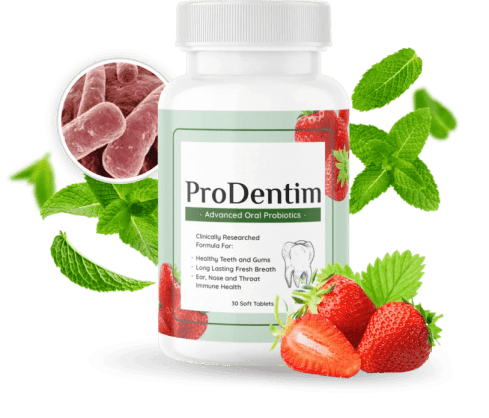
ProDentim is the oral health probiotic that passes every criterion in my evaluation framework: it delivers all three gold-standard oral probiotic strains (L. Paracasei, B.lactis BL-04®, L. Reuteri) at 3.5 billion CFU via a dissolvable strawberry-flavored chewable candy format that releases bacteria directly into the oral cavity. It adds Inulin for prebiotic colonization support, Malic Acid for natural enamel brightness, Tricalcium Phosphate for enamel mineral support, and Peppermint for antimicrobial freshening. Non-GMO, Gluten-Free, made in an FDA-approved manufacturing facility.
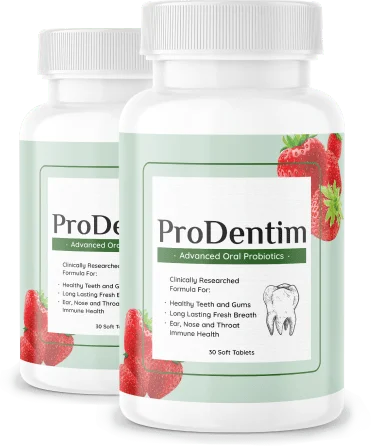
Pricing (best value: 6-bottle supply):
How to Use Oral Health Probiotics for Best Results
The protocol that maximizes oral probiotic efficacy is based on the biology of oral bacterial colonization:
- Take after brushing, not before: Morning brush first to clean surfaces, then take the probiotic. Clean surfaces allow better colonization than plaque-covered ones.
- Dissolve slowly — do not chew and swallow: The entire mechanism depends on prolonged bacteria-to-surface contact time. Let the tablet dissolve completely over 2–4 minutes. Swallow residual saliva at the end.
- Use separate from strong antibacterial mouthwash: If you use chlorhexidine or high-alcohol mouthwash, use it at a different time of day (e.g., probiotic in the morning, mouthwash at night). Consider whether daily antibacterial mouthwash is necessary for your situation — discuss with your dentist.
- Daily consistency over 90 days minimum: Oral microbiome shifts take time. Four weeks establishes initial colonization. Eight to twelve weeks shows meaningful microbiome composition changes. Ninety days produces the stable, self-sustaining shifts that deliver lasting benefit.
- Complement with diet: Fermented foods (yogurt, kefir, kimchi) support the broader microbial environment. Reducing dietary sugar removes the primary substrate for S. mutans and reduces the competitive advantage of cavity-causing species.
Frequently Asked Questions About Oral Health Probiotics
What are oral health probiotics?
Live beneficial bacteria delivered directly to the oral cavity through dissolving or chewable formats — to colonize oral surfaces and support microbiome balance. Fundamentally different from gut probiotics in both strain selection and delivery format.
Do oral probiotics really work for teeth and gums?
Yes, with the right strains in the right format. Published RCTs document significant improvements in gum pocket depth and bleeding on probing for L. Reuteri. Breath improvement and S. mutans suppression are well-documented across multiple studies. Results require consistent daily use over weeks to months.
What is the best oral probiotic in 2026?
ProDentim — 3.5B CFU, three gold-standard strains (L. Paracasei, BL-04®, L. Reuteri), dissolvable chewable format, Inulin prebiotic, Malic Acid, Tricalcium Phosphate, Peppermint. FDA-approved facility, 60-day guarantee, 95,000+ reviews.
Can oral probiotics replace brushing and flossing?
No. Brushing and flossing remove physical plaque and food debris that probiotics cannot dislodge. Oral probiotics complement conventional hygiene by addressing the microbial balance dimension that brushing alone cannot — they work together, not in place of each other.
How long does ProDentim take to work?
Most users notice improved breath freshness within 1–2 weeks. Gum comfort improvements typically develop over 4–8 weeks. Full microbiome rebalancing benefits are seen at 90–180 days of consistent daily use. The 60-day guarantee covers the initial evaluation period.
📚 Explore More WellnessDecision Guides
Medical Disclaimer & Affiliate Disclosure: This guide is informational only and does not constitute dental or medical advice. Oral health probiotics are not intended to diagnose, treat, cure, or prevent any disease. Statements have not been evaluated by the FDA. WellnessDecision may earn affiliate commissions through links in this guide. Affiliate relationships never influence editorial assessments. See our Editorial Policy and Affiliate Disclosure.